
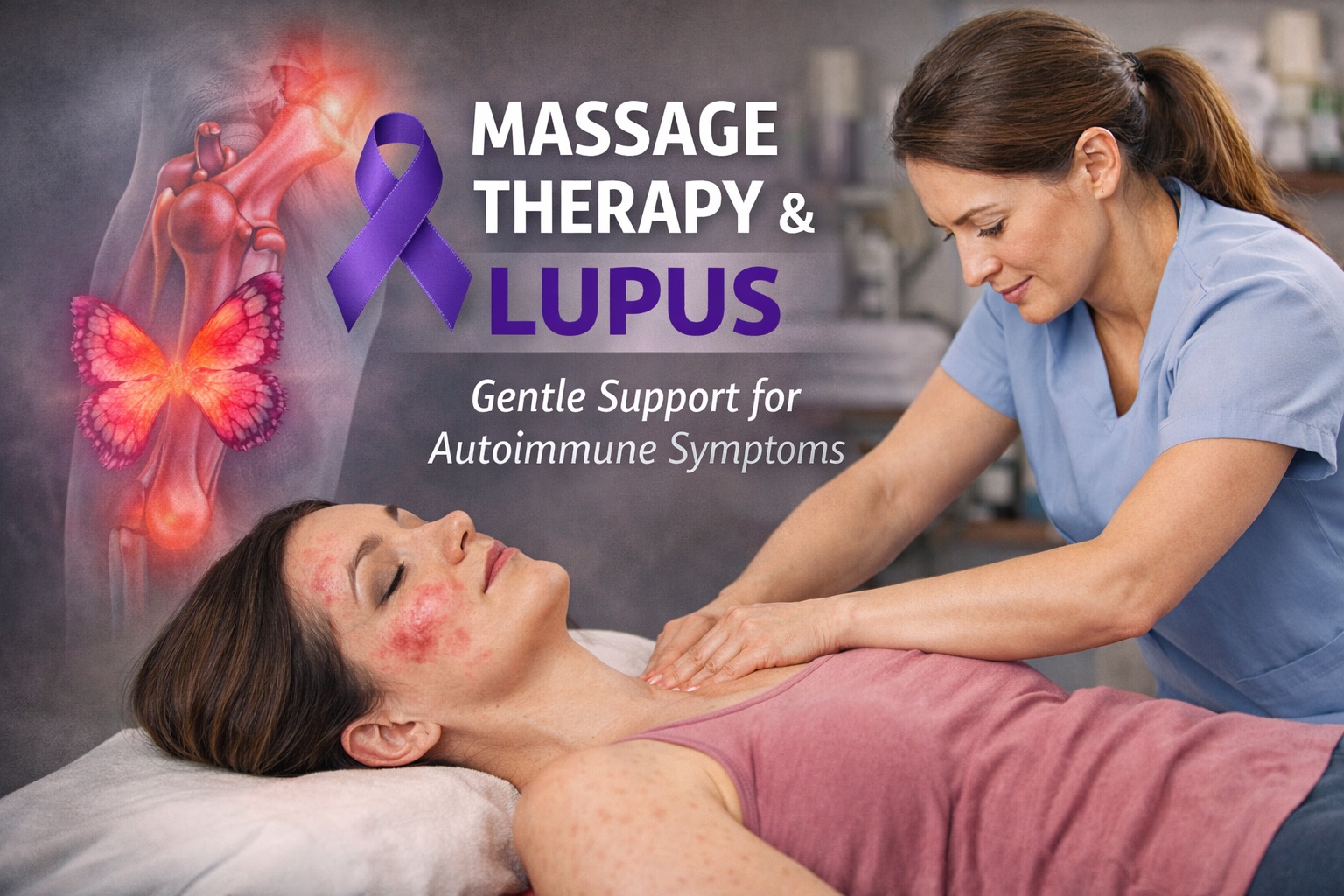
How Massage Therapy Can Support Clients With Lupus
Lupus is a complex autoimmune condition that can affect many systems in the body — joints, skin, muscles, organs, and more. For massage therapists, clients with lupus often seek therapy for comfort, tension relief, stress reduction, and help managing symptoms that impact daily life. Understanding the nature of lupus and how massage interacts with its clinical presentation empowers you to practice safely, confidently, and compassionately — enhancing both outcomes and professional trust.
What Is Lupus?
Lupus refers to a group of autoimmune diseases in which the immune system mistakenly attacks healthy tissues. The most common form, systemic lupus erythematosus (SLE), can affect joints, skin, kidneys, heart, lungs, and nervous system. Symptoms vary widely but often include:
- Persistent or fluctuating fatigue
- Joint pain and stiffness
- Muscle aches
- Rashes or photosensitivity
- Periods of flare-ups and remission
Each client’s experience with lupus can be different, which makes clear communication and individualized care planning essential.
How Massage Therapy Can Help — With Awareness and Adaptation
Massage therapy does not treat the disease itself, but when applied appropriately, it may support clients by:
1. Reducing Muscular Tension and Pain
Gentle, rhythmic strokes help release muscle tension — particularly in areas that compensate for joint discomfort or altered movement patterns.
2. Supporting Relaxation
Lupus is often accompanied by stress and sleep disturbances. Massage that engages the parasympathetic nervous system can support relaxation, which may indirectly help pain perception and overall well-being.
3. Encouraging Gentle Movement
Massage may gently assist in maintaining soft tissue mobility, particularly around joints affected by pain or stiffness.
Studies and professional consensus suggest that when massage is adapted to the client’s current state, it can play a supportive role in comprehensive symptom management for people living with lupus.
Practical Considerations for Massage Therapists
Working safely with clients who have lupus involves thoughtful assessment and adaptation:
Screen Thoroughly
Ask about:
- Current symptoms and flare-ups
- Medications (e.g., immunosuppressants, corticosteroids)
- Recent lab results or clinical guidance
- Joint pain patterns and mobility limitations
This allows you to set session goals collaboratively and adjust techniques accordingly.
Adapt Techniques Based on Tolerance
Clients with lupus often display:
- Joint hypermobility
- Increased sensitivity
- Fluctuating pain
Focus on comfort-first techniques like Swedish massage, gentle effleurage, and myofascial light work. Deeper, more aggressive work may be inappropriate — especially during active flare-ups.
Avoid Contraindicated Areas
If a client has:
- Acute joint inflammation
- Skin manifestations (e.g., rashes)
- Medications that increase bruising risk
Avoid direct work over these areas and adjust pressure or technique to match tolerance.
Monitor in Real Time
Check in frequently:
- “How does that feel?”
- “Any increase in discomfort?”
- “Would you like less or more pressure?”
Real-time feedback is invaluable for safety and client trust.
Why This Matters for Your Practice
Clients with lupus often appreciate practitioners who:
- Demonstrate informed clinical awareness
- Communicate clearly
- Adapt pressure and techniques respectfully
- Recognize the difference between supportive care and medical treatment
This confidence enhances your reputation and supports better outcomes within the scope of massage therapy.
Learn More and Elevate Your Skills
If you’re ready to deepen your understanding of lupus — its clinical presentation, implications for touch therapy, and scope-aware adaptations — the Massage Therapy and Lupus continuing education course from the Somatic Arts & Sciences Institute is designed for you.
Explore the course and enroll:
Massage Therapy and Lupus – SASI Course Page
Sources
- Lupus Foundation of America – What Is Lupus?
https://www.lupus.org/resources/what-is-lupus - Mayo Clinic – Lupus: Symptoms and Causes
https://www.mayoclinic.org/diseases-conditions/lupus/symptoms-causes/syc-20365789 - National Institute of Arthritis and Musculoskeletal and Skin Diseases (NIAMS) – Lupus Overview
https://www.niams.nih.gov/health-topics/lupus - Cleveland Clinic – Lupus: Treatment and Management
https://my.clevelandclinic.org/health/diseases/17802-lupus - American Massage Therapy Association (AMTA) – Massage and Chronic Conditions
https://www.amtamassage.org/publications/massage-therapy-journal/massage-and-your-body/
Picture courtesy of: