
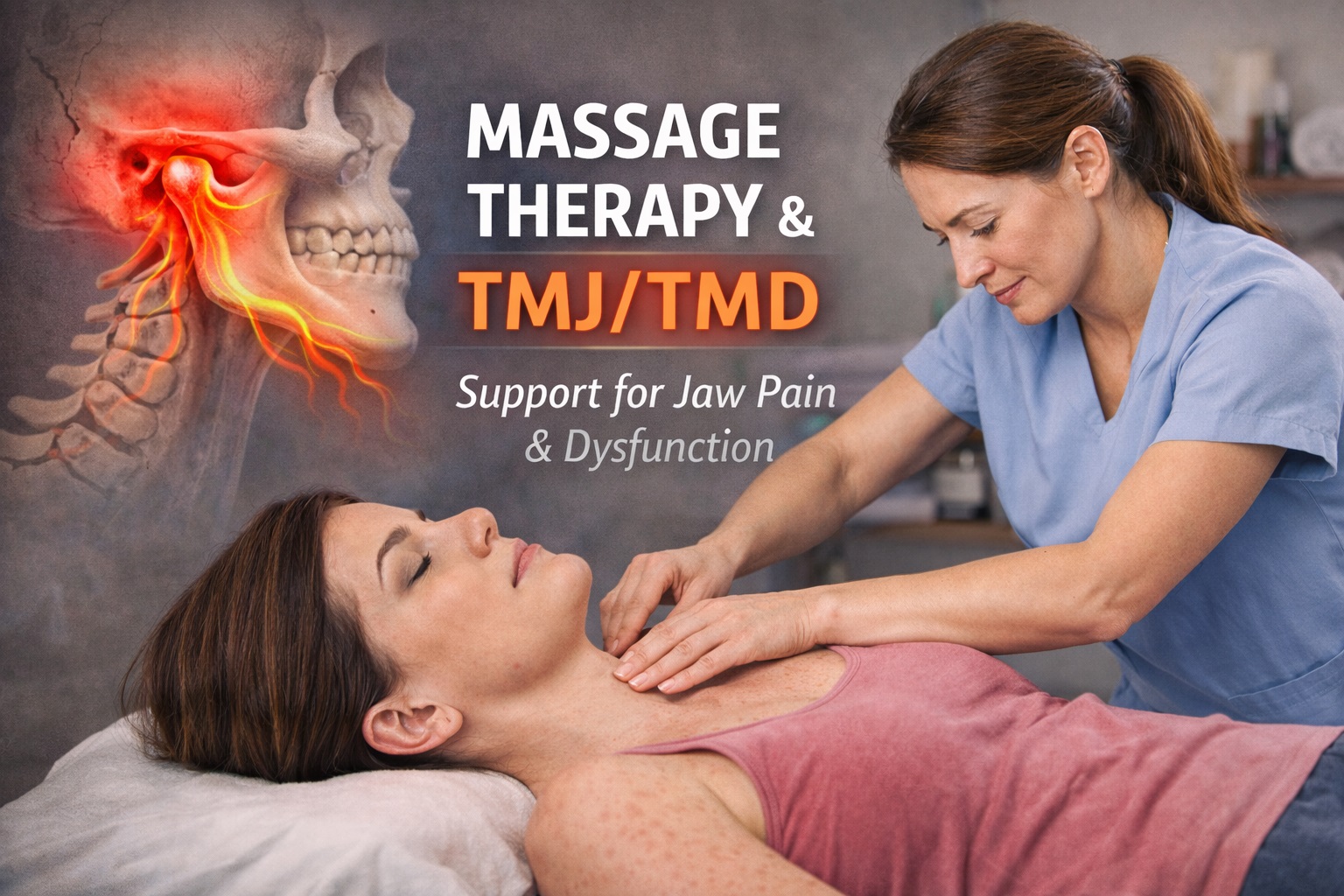
How Massage Therapy Can Support Clients With Temporomandibular Joint Disorders (TMJ/TMD)
Temporomandibular joint disorders (TMD), commonly referred to as TMJ, affect the jaw joint and the muscles that control chewing and jaw movement. Clients with TMD often present in massage therapy settings seeking relief from pain, jaw tension, headaches, or limited jaw mobility. As massage therapists, understanding the mechanics of the jaw, how TMD presents, and how massage can support comfort and function — without overstepping your scope — allows you to provide safe, confident, and effective care.
What Are TMJ Disorders?
The temporomandibular joints connect the lower jaw (mandible) to the skull, allowing essential movements like chewing, speaking, and yawning. TMD refers to a range of conditions that affect:
- Joint mechanics
- Muscles of mastication (chewing muscles)
- Structural alignment
- Soft tissue tension
Symptoms may include:
- Jaw pain or soreness
- Clicking, popping, or grating sounds
- Limited mouth opening
- Facial pain
- Headaches or neck tension
TMD is multifactorial — meaning more than one anatomical or functional element may contribute — so a holistic, cautious approach serves clients best.
How Massage Therapy Can Help
Massage therapy does not “cure” TMD, but it can be a supportive component of a broader pain-management and functional improvement plan by:
1. Reducing Muscle Tension
Muscles involved in chewing — like the masseter, temporalis, and pterygoids — can become tight in response to stress, bruxism (teeth grinding), postural imbalance, or joint irritation. Gentle soft-tissue work can help ease protective muscular tension.
2. Improving Jaw Mobility
Supporting the muscles that control jaw motion with gentle release techniques may assist clients in achieving improved comfortable range of motion.
3. Easing Related Neck and Facial Tension
TMD often co-exists with tension in the neck, shoulders, and upper back. Addressing these related regions can promote overall comfort.
4. Supporting Relaxation
Stress is a common contributor to TMD symptoms — and massage that promotes parasympathetic relaxation can help reduce bracing and tense holding patterns.
These benefits are most meaningful when massage is used as part of an integrative care plan under the guidance of, or in coordination with, other healthcare providers.
Practical Guidelines for Massage Therapists
Here are clinical strategies to support clients with TMD:
1. Start With a Detailed Intake
Ask about:
- Jaw pain location
- Headaches related to jaw use
- Clenching/grinding habits
- Impact on eating, speaking, or yawning
- Recent dental or medical evaluations
This helps you tailor your approach and recognize red flags.
2. Use Gentle, Targeted Techniques
Focus on:
- Light effleurage over jaw muscles
- Gentle myofascial release to the face and neck
- Suboccipital release (when appropriate)
- Relaxation-oriented touch
Avoid aggressive or deep work directly over the TMJ itself, especially without clinical clearance.
3. Address Supportive Areas
Work the upper trapezius, levator scapulae, sternocleidomastoid, and suboccipital muscles to help release tension that can contribute to TMD symptoms.
4. Communicate Clearly
Check in during the session:
- “Is this pressure comfortable?”
- “Any sensations of jaw clicking or discomfort?”
- “Would you like adjustments to technique or pressure?”
Real-time feedback ensures safety and a collaborative experience.
5. Encourage Home-Based Strategies
Clients may benefit from:
- Gentle jaw stretches (as cleared by clinician)
- Heat or cold applications, as tolerated
- Stress-management practices
Always remind clients to consult their clinician before starting new self-care routines.
When to Exercise Caution
Refer clients for medical or dental evaluation if they:
- Have severe jaw locking or inability to open
- Report numbness, significant weakness, or sudden changes
- Have trauma history (e.g., recent injury to jaw)
- Experience signs of infection or swelling around the joint
Massage therapists do not diagnose, but recognizing red flags and encouraging professional assessment protects clients and supports integrated care.
Expand Your Clinical Skills
Temporomandibular joint disorders present with unique mechanics and symptom patterns that benefit from careful assessment and technique adaptation. The Massage Therapy and Temporomandibular Joint Disorders continuing education course at the Somatic Arts & Sciences Institute offers structured, practitioner-focused knowledge to help you integrate safe, effective strategies into your practice.
? Learn more and enroll:
Massage Therapy and Temporomandibular Joint Disorders
Sources
- Mayo Clinic – TMJ Disorders
https://www.mayoclinic.org/diseases-conditions/tmj/symptoms-causes/syc-20350941 - National Institute of Dental and Craniofacial Research (NIDCR) – TMJ Disorders
https://www.nidcr.nih.gov/health-info/tmj - Cleveland Clinic – TMJ Syndrome
https://my.clevelandclinic.org/health/diseases/10938-temporomandibular-joint-disorders - American Massage Therapy Association (AMTA) – Massage & Head, Neck, and TMJ Pain
https://www.amtamassage.org/publications/massage-therapy-journal/massage-and-head-neck-pain/ - PubMed Central (PMC) – Manual Therapy for TMD
https://www.ncbi.nlm.nih.gov/pmc/articles/PMC4923928/